Updated on September 10, 2026 • 9 min read
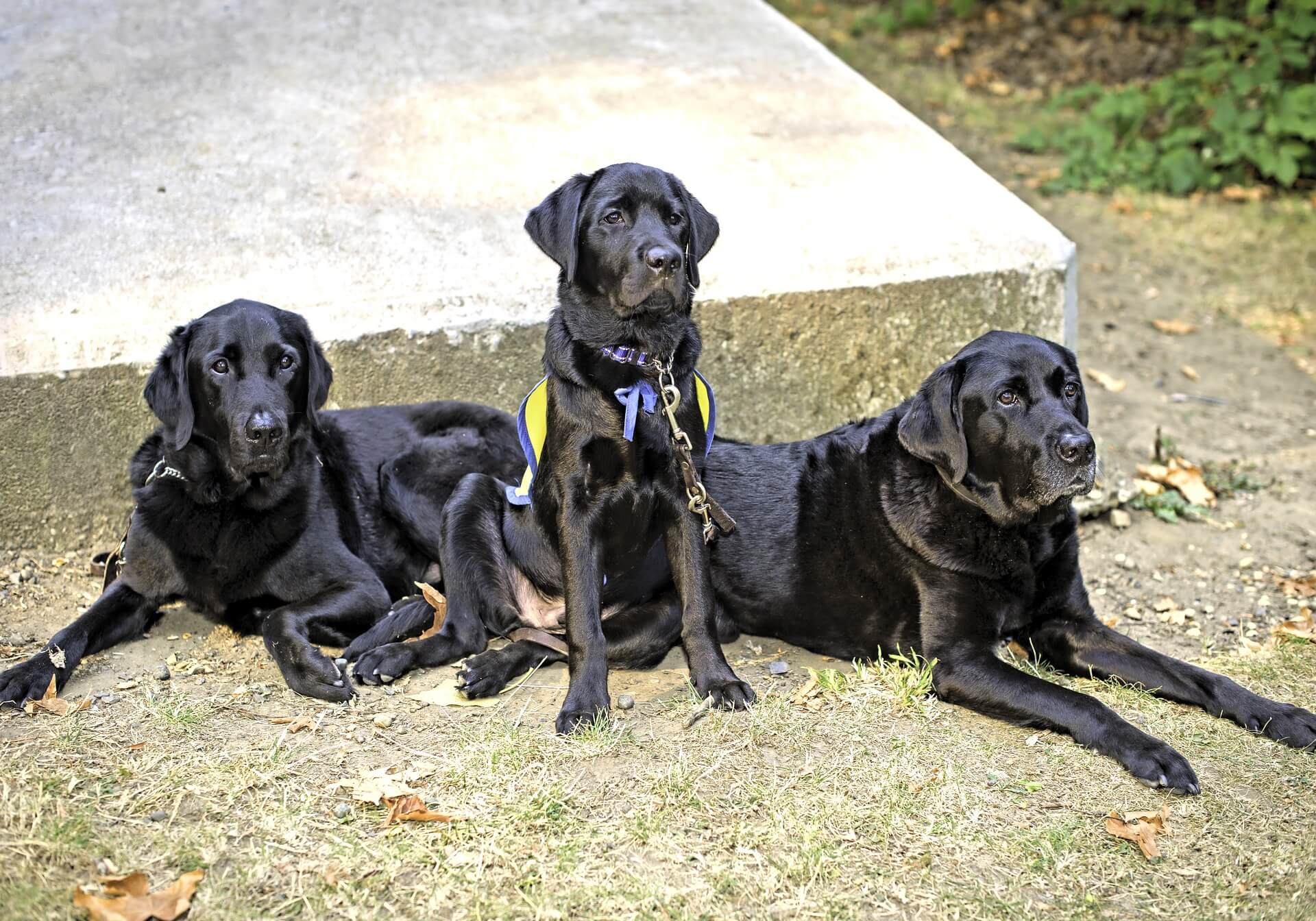
For people who are suffering from physical or mental disabilities, medications and assistance equipment are the most traditional ways to reduce dangers due to the disability. However, service dogs, also known as Assistance Dogs, have developed into a new rehabilitation method in recent years. Compared to normal pets, service dogs are very skillful in performing specific tasks and providing emotional support in times of stress, which allows disabled people to maintain their independence and improve their health and wellbeing. In the US, service dogs are widely recognised in hospitals, schools, stores, accommodation, transportation, and many public places, as long as they have been registered as a qualified service dog. If you are wondering if your dog can be a certified service helper and can accompany you anywhere in the UK, here are things you need to know beforehand.
Assistance dogs are trained to support disabled people or people with long-term health conditions by helping them perform daily activities more safely and independently.
A person’s disability does not need to be immediately visible.
Assistance dogs may support people with conditions including:
• Autism
• Bone and skeletal problems (such as osteoporosis, scoliosis, etc.)
• Cancer
• Chronic illnesses like diabetes
• Dementia
• Epilepsy
• Mobility/Balance difficulties (including paralysis)
• Post-Traumatic Stress Disorder (PTSD)
• Vision impairment (such as blindness)
• Hearing impairment (such as hearing loss)
• Sleep disorders (such as narcolepsy)
• Dementia
• Other long-term conditions that substantially affect daily life
An assistance dog should provide meaningful practical support rather than companionship alone. Whether an assistance dog is appropriate depends on the individual’s circumstances and disability-related needs. It is unlikely that one service dog is suitable for all of the illnesses above. Normally, doctors will provide you with the ultimate advice and alternative treatment after prolonged observation.

As service dogs must undergo rigorous training and serve their handlers in different locations, they have to overcome lots of difficulties during training and restrain their eagerness to play or rest when working for humans. According to professional trainers, a qualified service dog should have a good personality, have been systematically trained and passed public access tests.
• Has high trainability. Responds well to cues from trainers or handlers, which is the key to efficient training.
• Alert to stimuli (such as behavioral signs of human anxiety and low blood sugar levels)
• Eager to be held or petted by the handler
• Not easily distracted by sound, food, and other animals
• Good at collaboration, which is important for the work with the handler or trainer. (Similar to “high trainability”)
• Courteous and gentle to strangers who ask for petting, the staff of the “No pets” store, and so on.
• Friendly and confident when greeting a stranger
• Not too active. A service dog should accompany the handler calmly and obediently. Otherwise, an energetic dog may bring you many problems or complaints.
It usually takes one to two years to fully train a service dog. Therefore, a qualified service dog should be older than one year. The exact training period depends on several factors:
• Age at which training begins. A puppy will learn faster and perform better than an adult dog.
• Breeds that have a low desire for prey are usually great service dogs.
• Tasks depend on different types of service dogs. Psychiatric service dogs for people with mental disabilities are not required to perform complicated tasks, like navigating humans across the road. Therefore, the training is always easier and shorter than for guide dogs.
• Training method and pace can directly affect the training result. It is better to hire a reputable trainer or send the dog to a training school for professional learning.
Other important factors that influence the training can be found here: How Long Does it Take to Train a Service Dog?

After service dog training, the final step is to check the result of the training - whether your dog is able to keep calm and how it deals with special situations in public. There are six basic tests:
• Staying with the owner
• Controlled unloading of a vehicle
• Entering through a doorway
• Staying within six feet around the owner
• Dealing with distractions
• Dining with the handler in a restaurant
Yes. An assistance dog does not have to be trained by an Assistance Dogs UK member organisation to qualify as an assistance dog.
Some disabled people receive dogs from charities or specialist organisations, while others train their own dog, work with an independent trainer or use a combination of professional and owner-led training. There is no UK law requiring every assistance dog to be trained by a particular charity or accreditation body.
However, an owner-trained dog should still be appropriately trained, under control and capable of reliably assisting its handler. Keeping records of your dog’s training can also be useful, particularly when demonstrating the dog’s level of preparation or explaining its role to businesses and transport providers.
The UK Equality Act of 2010 (EA) protects service dogs in the UK from unlawful discrimination when entering places where animals are prohibited or when accompanying owners by taxi or airplane. Business owners and service providers are required to accommodate individuals with disabilities as well as grant the service dog access to publicly accessible premises and means of transport.
There is no official registration for assistance dogs granted by the UK government. However, most UK companies or premises recognise the service dog that has been trained and certified by one of the following organisations: Assistance Dogs International (ADI) and The International Guide Dog Foundation (IGDF).
They belong to Assistance Dog UK (ADUK) and cover many types of service dogs, including:
• Service dogs for autism
• Mobility assistance dogs
• Guide dogs for the blind
• Hearing dogs for deaf people
• Medical detection dogs
• Seizure alert/response dogs
In Great Britain, disabled people are protected from discrimination under the Equality Act 2010.
Assistance dogs can be considered auxiliary aids that help disabled people access services and participate in everyday life.
Businesses and service providers generally need to make reasonable adjustments so that disabled customers can access their services.
This can include permitting a trained assistance dog to accompany its handler in places where ordinary pets would not normally be allowed.
Examples may include:
• Shops
• Restaurants
• Hotels
• Workplaces
• Taxis
• Private hire vehicles
• Many public buildings and services
A general “no dogs” or “no pets” policy should not automatically be applied to a disabled person using an assistance dog.
Only well-trained and certified service dogs qualify for these privileges. The laws in the UK currently do not apply to other assistance animals like emotional support animals and therapy dogs. Also, unlike the US, almost all airlines in the UK allow only service dogs as “assistance animals” to enter the passenger cabin. Other animals (such as ESA and pets) must be transported in the cargo hold. Therefore, if your emotional support pet can calm down anxieties or alleviate illnesses without having experienced special training, it can be removed from homes, airplanes, and so on.
Air travel has additional rules and should be treated separately from ordinary public access.
The UK government defines a recognised assistance dog for travel purposes as a dog trained to actively assist its owner with needs related to a disability or health condition. Recognised assistance dogs may be allowed to travel in the aircraft cabin on routes where pets would otherwise be subject to different travel arrangements.
However, airlines may have their own procedures and documentation requirements, so handlers should contact the airline well before travelling. Do not assume that an online assistance dog registration or ID card alone will satisfy an airline’s requirements.
No. There is no official government register covering all assistance dogs in the UK.
You may use a private or voluntary identification or registration service, but this is not the same as government registration.
Legal recognition depends on the individual circumstances and the dog’s role and training rather than simply holding a registration certificate.
No. Assistance Dogs UK does not operate an assistance dog registration scheme.
Dogs trained by ADUK member organisations may receive identification from those organisations, but assistance dogs can also be owner-trained.
Yes. UK law does not require all assistance dogs to be trained by a particular charity or organisation. An owner-trained dog should nevertheless be appropriately trained and able to assist its disabled handler reliably.
There is no general legal requirement for assistance dogs to carry a particular ID card.
Some handlers nevertheless choose to carry voluntary identification because it can help communicate that the dog is working.
Not necessarily. There is no universal legal requirement for an assistance dog to wear a specific vest or harness. However, visible identification can sometimes make everyday interactions easier.
Disabled people using trained assistance dogs generally have important protections against discrimination when accessing goods and services. Businesses should not automatically exclude an assistance dog simply because they have a no-pets policy.
Recognised assistance dogs can qualify for cabin travel on applicable routes, but airlines may impose specific procedures and documentation requirements. Always check directly with the airline before booking or travelling.
With proper training and registration, your domestic dog can become a qualified service dog and accompany you in many places, such as hotels, shops, workplaces, flats and minicabs where other animals are usually not welcome. It does, however, mean that you have the responsibility of constantly looking after an animal. Otherwise, a service dog could be evicted for disobedient or rude behaviour.